Dry Van Freight
 Refrigerated Shipping
 Flatbed
 Full Truckload
 Less than truckload
 Warehousing Solution
 Trade Show Shipping
 Dry van
 Temperature Controlled
 Flatbeds
 Intermodal Containers
 Storage Trailers
 Chassis Types
How Long Does Expedited Shipping Take?
Need your shipment to get there fast? Expedited shipping could be the answer but how long does expedited shipping take really? While RoadLINX offers 1-day expedited shipping, this is not the case for all shipping companies.
It is a common misconception that expedited shipping means an exact time of under three business days. While most expedited shipping may fall within that time span, it is not always the case and may not be guaranteed. This is why it is so important to not only ship or order your items with time to spare but also ensure you look at the estimated arrival times when placing an order.
Here we will look at how long expedited shipping takes, how items are shipped, and everything else you need to know about getting your items where they need to be fast.
What Exactly Does Expedited Shipping Mean?
Expedited shipping is not an exact amount of time for shipping. Instead, when you choose expedited shipping, it mostly means that your package will be prioritized over others. Due to this, each company’s definition of “expedited shipping” can vary quite a bit.
Generally, standard shipping is anywhere from 5 to 10 business days. Expedited shipping is any shipping that takes less than this. However, most expedited shipments will take around 2 to 3 business days.
Expedited Shipping on eBay and Amazon
To further understand how much expedited shipping can vary, we look at two of the biggest online retailers: Amazon and eBay. On eBay, where standard shipping can mean up to 23 business days, expedited brings this down to around 10 business days. It is important to note though that items from eBay can arrive more quickly than this if the seller and buyers are closely located. eBay also does not provide the shipping itself so the variances are due to the individual sellers.
Conversely, Amazon offers both expedited and express shipping options on some items. Expedited on Amazon means as little as 1 day and up to 3 days. While this is fast, Express is even faster and means next-day delivery, specifically before 1 p.m.
Amazon FBA Shipping from RoadLINX
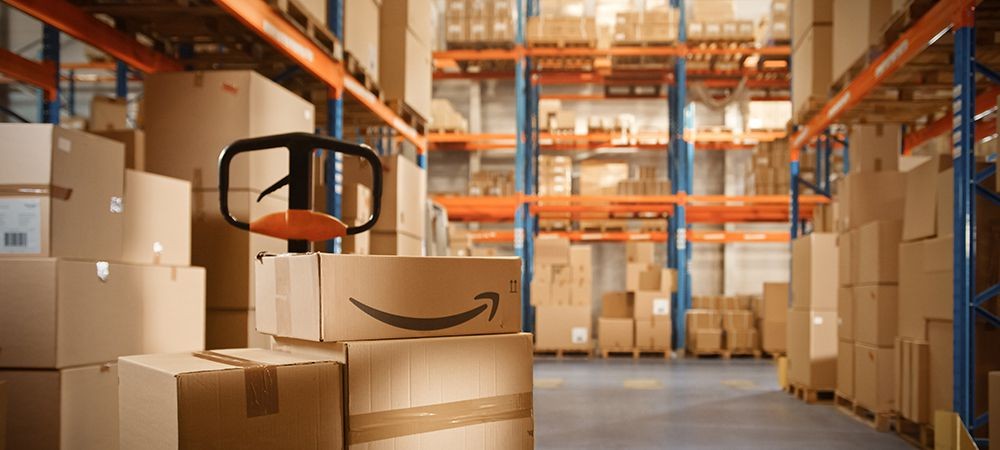
Open up your business to even more customers with Fulfillment by Amazon. This unique program allows companies and individuals to ship items through Amazon quickly and easily. Your items are sent to and stored at an Amazon fulfillment center where they can be shipped from.
When you choose FBA shipping from RoadLINX, we get your items directly to an Amazon fulfillment center where they are packaged and shipped to individual buyers. This allows you to access the vast customer base of Amazon and easily offer expedited shipping, express shipping, and international shipping options.
Note, we offer FBA shipping through Canada and the United States. This is helpful for both sellers and buyers in both countries. Prior to FBA shipping, shipping costs to and from Canada and the United States would often deter buyers. Now, shipping is cheaper and faster between the two countries. Expedited shipping options make this even faster and open up a whole new customer base to many companies.

How are Expedited Shipping Items Shipped?
Shipping methods for expedited items will vary depending on the items and both their point of origin and their final destination. However, nearly all expedited packages will be shipped by either truck or plane. Rarely, if ever, will an expedited shipment include a train or ship as both of these transportation methods are much slower.
Is Expedited Shipping Guaranteed?
The guarantees associated with expedited shipping will depend on the company you are ordering from. Sometimes if an item does arrive outside the expedited delivery window, the company may offer a refund on the shipping charges. This may or may not be automatic and you might have to contact the company to receive a refund.
Same-Day and Next Day Shipping
Is expedited shipping the same as same-day or next-day shipping? For some companies and delivery services, expedited shipping may mean the same day or next day delivery. However, this will usually be called “same-day” or “next-day” delivery versus “expedited delivery.” This is important to note since you should not choose expedited delivery assuming it will be delivered the next day automatically.
What Affects Expedited Shipping Times?
Shipping times, both expedited and standard, can be affected by any number of factors, including:
International Shipping: While domestic shipping can certainly be delayed, international shipping has several additional barriers. Getting through customs can be a difficult process especially for certain items like food, alcohol, cigarettes, and more. Even general, nonperishable merchandise can be delayed if customs chooses to take extra time to inspect a shipment. Reduce the chances of a customs delay by filling out the shipping documentation with as much detail as possible. Accurately labeling and describing your shipment will lessen the chances that customs will need to take a closer look inside packages.
Weather: If a storm is bad enough to make driving difficult, it is likely bad enough to cause delays for shipping as well. Fortunately, expedited shipping methods make it easier to pivot around weather-related issues. This is especially true for air freight. Planes can often find alternate ways around storms in order to stay on track as much as possible. Truck freight does have a bit more difficulty so there is a higher chance this could be delayed for a storm.
Other Delays: Unexpect delays caused by global factors or accidents are also very possible. Due to this, it is always a good idea to send and order items as early as possible even when expedited shipping is an option. Recent global events have taught us more than ever how possible it is for the unexpected to happen. From global pandemics to ships stuck in a canal, companies, carriers, and even individuals need to keep this in mind when ordering and shipping items.
How Long Does Expedited Delivery Take with RoadLINX?
RoadLINX offers fast, standard shipping of only 2-days within the United States and Canada. We also offer expedited shipping that will take only one day. We accomplish this by using a two-person team of drivers to transport your goods.
By using two drivers for the same truck, we ensure continuous driving time while still keeping safety in mind. This also ensures there is no time lost to transferring items from one truck to another. Our safe and reliable expedited shipping is just one of the many ways RoadLINX seeks to serve our customers better.
Get an Expedited Shipping Quote Now
Ready to get started with your expedited shipping? RoadLINX is here to help. Our team of drivers and shipping logistics experts works to solve all your cargo shipping concerns on time and on budget.
We offer a full range of expedited shipping services along with warehousing solutions, temperature-controlled containers, cross-border shipping, and more. Get started with a free quote on your expedited shipping by contacting us at 905-760-1141.


Sign up for industry alerts, insights & news from RoadLINX